

Patrice Lumumba, né le 2 juillet 1925 à Onalua, au Congo belge, est une figure emblématique de la lutte pour l'indépendance de la République Démocratique du Congo, incarnant les aspirations d'un peuple en quête de liberté et de dignité face à l'oppression coloniale. Il est considéré comme une figure charismatique et fervent défenseur du panafricanisme, leader du Mouvement National Congolais (MNC), Patrice Lumumba a été un fervent défenseur de l'indépendance du Congo. Son ascension politique a culminé avec son élection en tant que premier ministre après les élections de mai 1960. La vie de Patrice Lumumba étant premier ministre de la République du Congo, est un récit vibrant d'espoir, de lutte et de sacrifice. Né dans un Congo encore sous le joug colonial belge, Lumumba a émergé comme une figure charismatique et déterminée, incarnant les aspirations d'un peuple assoiffé de liberté et de dignité. [1]
Assassination of Patrice Lumumba: A Common Legacy Towards a Shared Future
The assassination of Patrice Lumumba on January 17, 1961, profoundly marked the history of the Democratic Republic of the Congo and had international repercussions, notably in China. Lumumba became a symbol of the struggle against imperialism and neocolonialism, and his legacy was fervently celebrated in China, where he was seen as a martyr for the cause of African emancipation. This admiration for Lumumba not only shaped the collective memory in China but also influenced the bilateral relations between the Democratic Republic of the Congo (DRC) and China. [2]
The Impact of Lumumba's Assassination in China
After Lumumba's death, China organized significant demonstrations to honor his memory. These events gathered more than a million people at Culdemane Square, a symbolic place of communist power in China. The Chinese Prime Minister, Chou En-Lai, delivered an eloquent speech in tribute to Lumumba, highlighting his crucial role in the struggle for the dignity and freedom of African peoples. Lumumba was described as a victim of imperialists, asserting that his legacy was valuable for the relations between China and the Democratic Republic of the Congo. This popular support reinforced Lumumba's image as a hero not only for the Congo but also for all African countries seeking independence.
Les manifestations en Chine ont également été accompagnées d'une production artistique intense célébrant Lumumba. Des poèmes, des caricatures et des œuvres d'art ont vu le jour, reflétant l'engagement de la Chine à soutenir les luttes anti-coloniales à travers le continent. Cette période a marqué un tournant dans les relations sino-africaines, où la figure de Lumumba est devenue emblématique d'une nouvelle ère de solidarité entre les nations post-coloniales. [3]
Sino-Congolese Relations: A History of Cooperation
The cooperation between the DRC and China dates back several decades. After the independence of the Democratic Republic of the Congo, Mobutu Sese Seko made his first trip to China in January 1967, marking the beginning of a collaboration that intensified over the years. The DRC has benefited from numerous infrastructures built with Chinese assistance, including the Martyrs Stadium and the People's Palace, as well as projects in the agricultural and medical fields. This initial partnership allowed Mobutu to strengthen his position on the international stage while developing the country's economic capabilities.
Under the presidency of Laurent-Désiré Kabila, although cooperation projects with China were not fully realized due to various internal obstacles, continuity in diplomatic relations was maintained. Kabila expressed his desire to establish stronger ties with China, recognizing the strategic importance of this relationship for the economic development of the Democratic Republic of the Congo. However, it was under Joseph Kabila that Sino-Congolese cooperation took on a new dimension with the addition of mineral resources and other forms of assistance.[4]
A Shared Vision for the Future: President Félix Tshisekedi Continues This Momentum
President Félix Tshisekedi continues this momentum during his recent visits in 2024, emphasizing the importance of Sino-Congolese cooperation in the industrial development of the DRC. He expressed his gratitude to China for its continued support and willingness to accompany the country in its quest for economic emancipation. This cooperation is seen as an essential path to transform the DRC and improve the well-being of its population. Indeed, Tshisekedi also highlighted the opportunities offered by Congolese natural resources within the framework of strengthened cooperation with China. The Congolese president aspires to make his country a key player in the global mineral resources market while ensuring that these riches directly benefit the Congolese people through local industrialization projects.
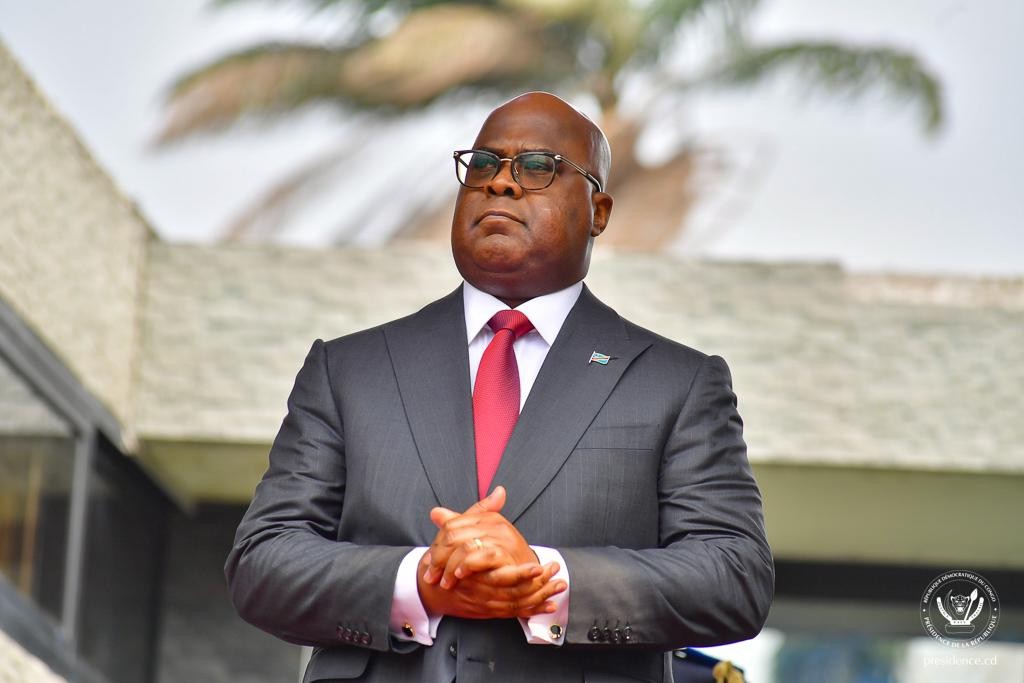
Lors du Forum sur la coopération Chine-Afrique (FOCAC) qui s'est tenu en septembre 2024 à Beijing, le Président Félix Tshisekedi a eu l'honneur d'être le premier président africain reçu en tête-à-tête par le Président chinois Xi Jinping. Cette rencontre historique a non seulement marqué un tournant dans les relations bilatérales, mais elle a également mis en lumière l'engagement de la Chine envers l'Afrique et son désir de renforcer les liens avec des nations comme la RDC. Tshisekedi a profité de cette occasion pour discuter des projets d'investissement chinois en RDC, notamment un protocole d'accord d'un montant de 500 millions USD pour le développement industriel, illustrant ainsi les ambitions partagées des deux pays dans leur quête de croissance et de prospérité mutuelle. [5]
Ambassador François Balumuene: A Key Player in Strengthening Bilateral Ties between China and the DRC
Ambassador François Balumuene plays a crucial role in the development of Sino-Congolese relations. Appointed in October 2021, Balumuene is recognized for his commitment to improving economic exchanges between the two nations. His recent visit to Zijin Mining demonstrates his dedication to promoting Congolese interests in investment and local resource transformation.
Balumuene emphasizes the importance of further integrating the DRC into global value chains to ensure responsible and beneficial exploitation for the Congolese people. His advocacy for cooperation focused on local mineral processing highlights the evolving Congolese expectations towards foreign partners.[6]
President Xi Jinping's Vision on Sino-Congolese Cooperation
Chinese President Xi Jinping considers cooperation with the DRC as a key element of his strategy to strengthen Sino-African relations. During his exchanges with President Tshisekedi, President Xi reaffirmed his commitment to sustainable development and industrialization in Africa while respecting national sovereignty. This approach promotes a partnership based on mutual respect and non-interference in internal affairs.
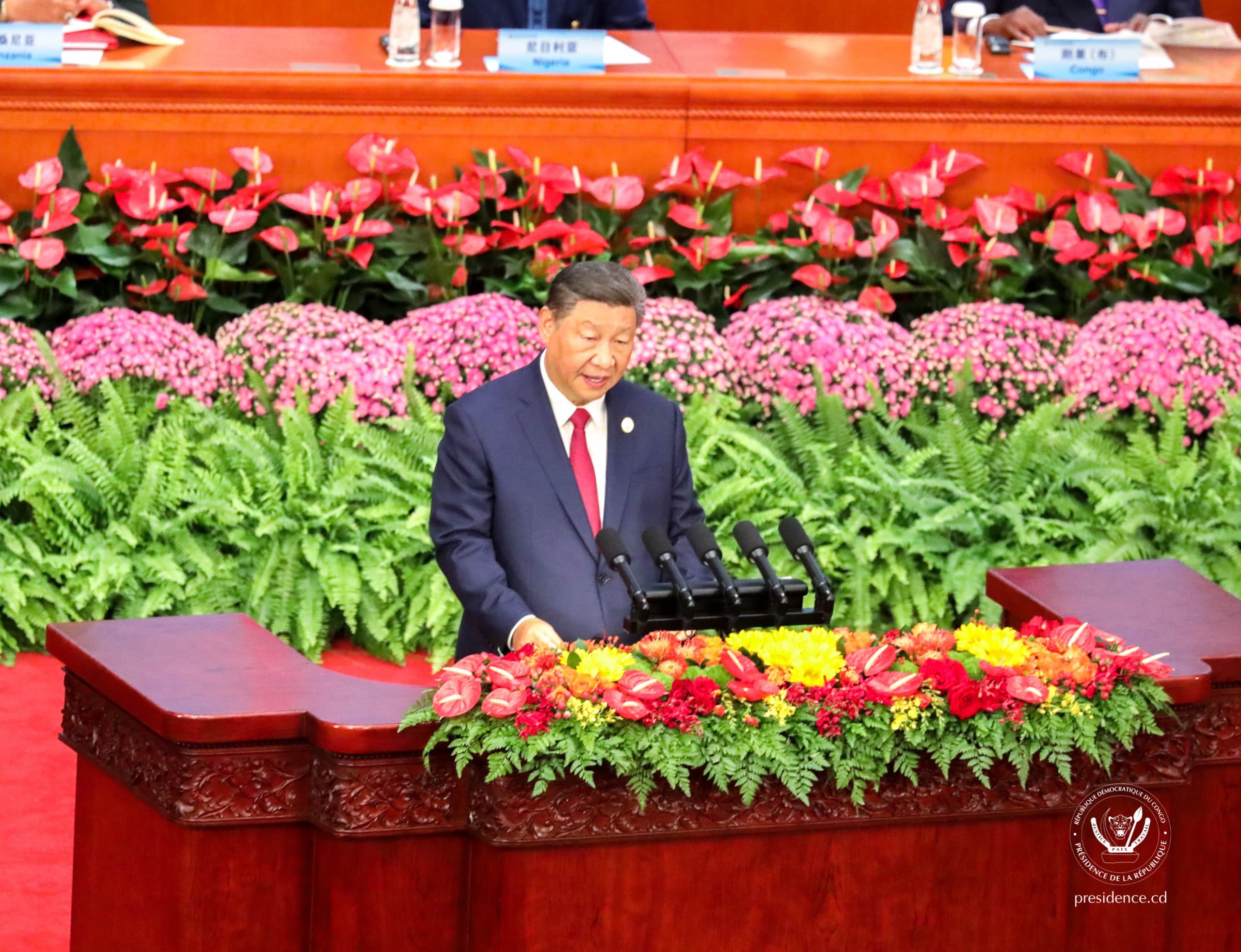
President Xi Jinping also sees this cooperation as an opportunity to expand Chinese influence while supporting African aspirations for sustainable development. By further integrating Congolese interests into his projects, Xi seeks to establish a win-win relationship that could serve as an example for other Sino-African partnerships.[7]