
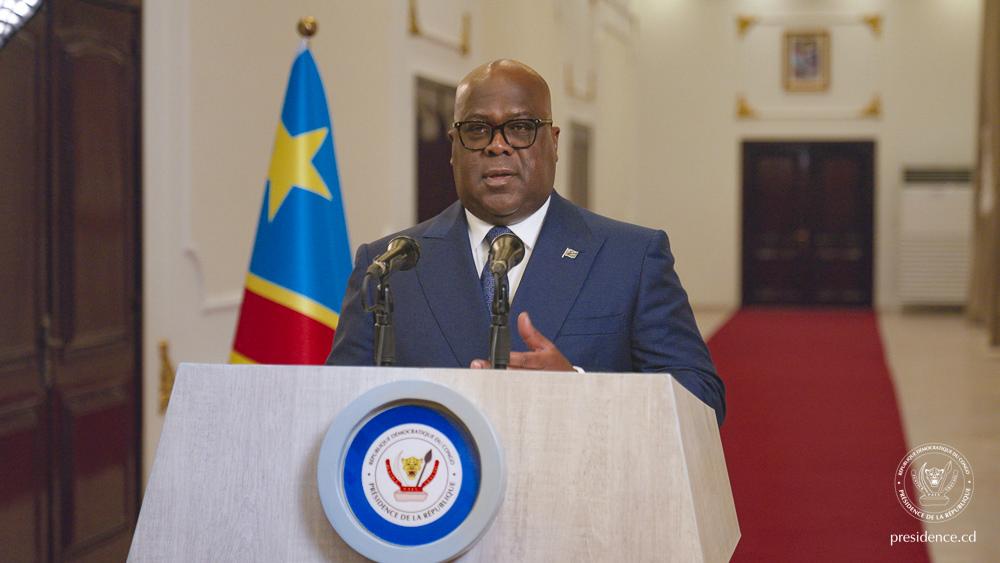
In a solemn address, the President of the Republic, Félix-Antoine Tshisekedi Tshilombo, officially launched the process this Thursday National Dialogue for Peace, Cohesion, and the Rebuilding of the State. An unprecedented initiative, designed as a sovereign response to the recurring crises that have weakened the country since its independence.
A clear assessment of past failures
From the outset, the Head of State provided an uncompromising assessment of the sixty-six years of independence. Despite the displays of courage and victories, the DRC remains faced with the same vulnerabilities: successive wars, violence in the East, weakening of institutions, and resource predation. He specifically highlighted the limitations of previous dialogues, too often reduced to power-sharing among political actors, without real involvement of the populations and without effective monitoring mechanisms.
Why have so many agreements not yet produced a lasting and irreversible peace?” he questioned, calling for a “demand for truth” about internal weaknesses.
External aggression and sovereign firmness
While acknowledging past mistakes, the president strongly reaffirmed that the DRC is a victim of a external aggression, confirmed by United Nations Security Council resolutions 2773 and 2808. It demanded the complete withdrawal of uninvited foreign forces and the end of all support to armed groups, paying tribute to the FARDC, the National Police, and the Wazalendo resistors who defend sovereignty on the ground.
A dialogue rooted in the provinces and open to all
The announced National Dialogue aims to be radically different from previous ones. It will not be held first in Kinshasa, but will begin with a extensive consultation in the 26 provinces, bringing together local authorities, civil society, religious denominations, communities, youth, women, diaspora, and the active forces of the Nation.
The national conference, which will be held in the capital, will be the culmination of this popular discourse. The process, lasting a maximum of three months, will result in the adoption of a National Pact for Peace, Cohesion, and the Rebuilding of the State.
Clear principles: no impunity, no negotiation with the aggressor
The president has set several red lines:
- Dialogue will not replace the ongoing diplomatic processes (Washington, Doha).
- It will not constitute nor a negotiation with the aggressor or its auxiliaries, nor a means to bypass institutions or universal suffrage.
- No general amnesty will be granted for war crimes, crimes against humanity, or sexual violence.
- An individual path to reintegration is, however, open to those who sincerely renounce weapons.
Transparency and monitoring: the promise of a breakthrough
To avoid the failure of previous dialogues, the president promised a public implementation matrix, with specific deadlines, clearly assigned responsibilities, and periodic reports made public. An Organizing Committee and a Preparatory Commission will be established in the coming days.
A call for national unity
In conclusion, the Head of State made a heartfelt appeal to all Congolese people, especially the youth, to fully participate in this process. He called on political actors to rise to the occasion and act responsibly, and promised calming measures to foster a peaceful climate.
The time is no longer for sterile postures. The time is for a jolt, for unity and for action."
The process is now officially underway. The international community, including the United States, Qatar, the African Union, and the European Union, is called upon to support this initiative, respecting Congolese sovereignty.