
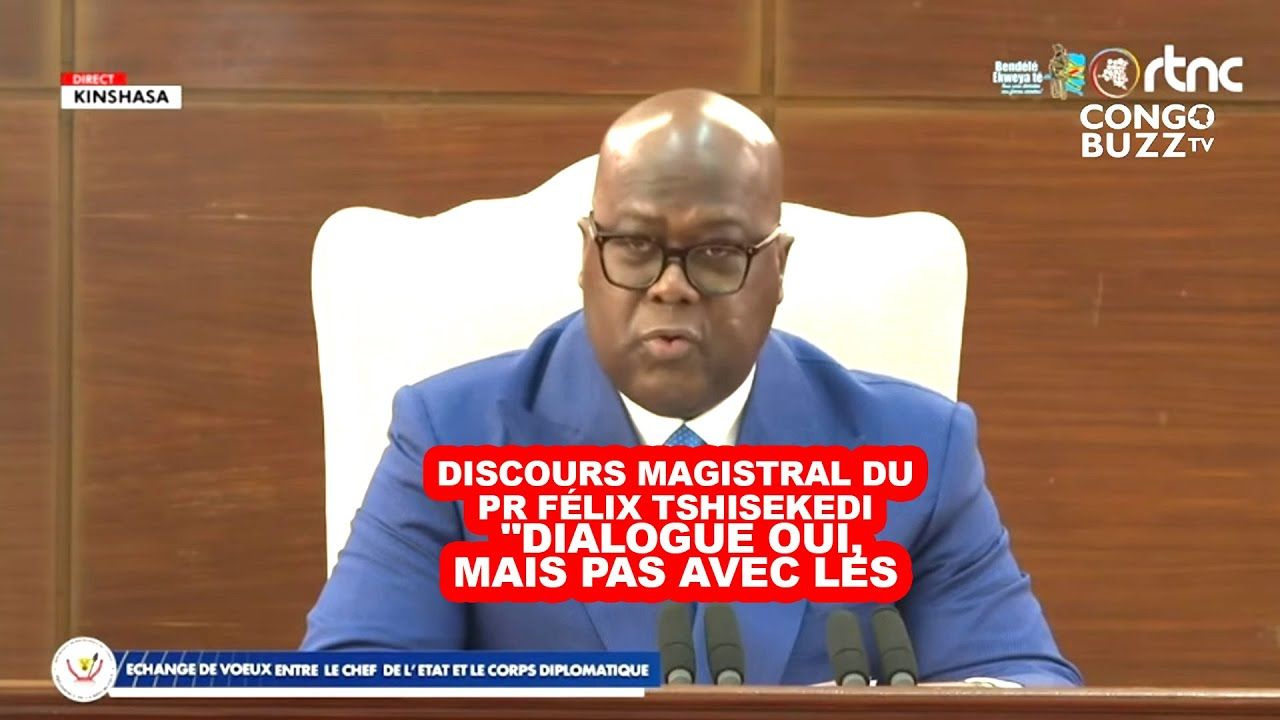
The Head of State reaffirmed the Government's openness to a peaceful, inclusive national dialogue conducted on Congolese soil, in strict compliance with the Constitution and institutions resulting from universal suffrage. However, he emphasized that this dialogue should in no way replace international obligations, nor serve to downplay the aggression that the DRC is a victim of, nor dilute established responsibilities.
Addressing the security situation in the East of the country, President Tshisekedi firmly denounced the external support given to armed groups, recalling that recent international developments, notably United Nations Security Council resolutions 2773 and 2808, have clearly established responsibilities and strengthened the international legal framework in favor of the DRC. He insisted that no justification can legitimize the occupation of Congolese territory, the predation of resources, or the forced displacement of civilian populations.
On the humanitarian front, the Head of State drew the international community's attention to the dire situation of displaced populations in the East of the country, calling for increased humanitarian aid while emphasizing that only lasting peace will address the root causes of this crisis.
The President of the Republic also highlighted the ongoing diplomatic momentum, praising the regional and international facilitation efforts, particularly those of Angola, Qatar, and African leaders, aimed at achieving lasting stabilization in the Great Lakes region.
Finally, the Head of State reaffirmed the DRC's vision for development based on industrialization, local transformation of strategic resources, energy transition, and balanced partnerships, citing structuring projects such as the Lobito corridor, the Kivu-Kinshasa Green Corridor, and the Grand Inga project.