
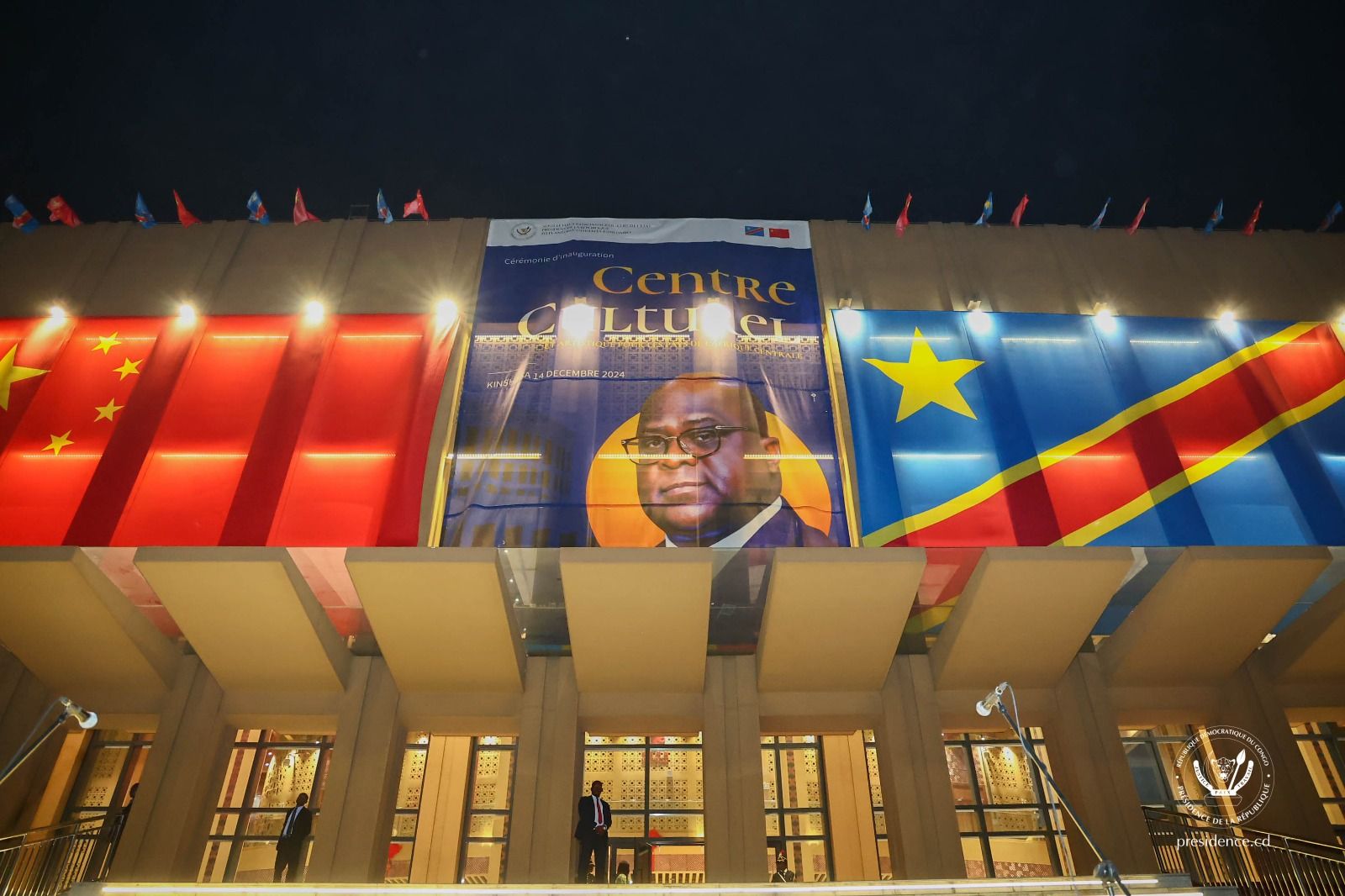
On December 14, 2024, Kinshasa resonated with the rhythm of a significant event for Congolese culture: the inauguration of the Central African Cultural and Arts Center by President Félix Tshisekedi. This complex, erected in the Kasa-Vubu district, opposite the Palais du Peuple, spans an impressive area of 93,000 square meters. This inauguration symbolizes not only an investment in cultural infrastructure but also a strong commitment to artistic and educational development in the Democratic Republic of the Congo (DRC).
A modern building serving Culture: State-of-the-art Infrastructure
The Central Africa Cultural and Arts Center is designed to become a true cultural hub in the DRC. With modern and diverse infrastructures, it meets a multitude of artistic needs. The large performance hall, which can accommodate up to 2,000 people, is intended for various events such as concerts, plays, and festivals. This type of space is crucial for Congolese artists seeking to perform in front of a large audience. The two amphitheaters, with 800 and 300 seats respectively, also offer opportunities for more intimate performances, allowing artists to interact more directly with their audience. These spaces are designed to foster an immersive and engaging atmosphere, essential for artistic performances.
In addition to performance halls, the center includes state-of-the-art recording studios. These studios will allow local musicians and producers to create and broadcast their works under optimal conditions. The presence of a dedicated dance hall also demonstrates a commitment to the movement arts, providing a platform for choreographers and dancers. The campus of the National Institute of Arts (INA) integrated into the complex reinforces its educational vocation. The INA plays a key role in training future Congolese artists, providing them with the skills necessary to excel in their respective disciplines. This place thus becomes a sanctuary for learning and sharing artistic knowledge. [1]
Essential Support for Congolese Artists: The Minister of Culture, Arts, and Heritage, Yolande Elebe, Expressed Her Enthusiasm
In her inaugural speech, the Minister of Culture, Arts and Heritage, Yolande Elebe, expressed her enthusiasm about the positive impact this center will have on Congolese cultural operators. She emphasized that "the establishment of this Cultural and Arts Center is a boon for Congolese cultural operators who often complained about the lack of cultural infrastructure." Before the opening of this complex, many artists faced major obstacles due to the lack of suitable spaces for their creative activities.
This new center now offers a conducive environment for artistic development. Artists will be able to organize workshops, creative residencies, and collaborative events, thus fostering a dynamic environment where innovation can thrive. [2]
The Minister of Higher Education expresses her gratitude to the President of the Republic by acknowledging the international recognition of the center: An achievement resulting from Sino-Congolese cooperation
Minister Safi Ayana also spoke at the inauguration to express her gratitude to President Tshisekedi. She emphasized that this building represents much more than just a structure; it is a recognition of the essential role that culture plays in the socio-economic development of the country. By allowing the INA to regain a space dedicated to training after more or less four decades of wandering, the Congolese government demonstrates its commitment to valuing cultural heritage.
This initiative also helps to strengthen the DRC's soft power on the international stage. By showcasing its cultural and artistic wealth, the country aims to position itself as a regional leader in the creative industries. This could attract not only local artists but also those from other African countries and beyond.
The inauguration of the Cultural and Arts Center is the result of a strategic cooperation between the Democratic Republic of the Congo and China. This ambitious project was completed by the Chinese company BICG in just 54 months. The total cost amounts to 100 million US dollars, funded by the Chinese government. This partnership illustrates how international collaborations can lead to beneficial outcomes for both parties. [3]
Fallout from the center's inauguration: a lasting impact on the cultural landscape
The opening of the center is not just a one-time event; it marks a turning point in the Congolese cultural landscape. By offering a modern space dedicated to the arts, this center will allow future generations of artists to thrive in an environment conducive to their creativity. The potential economic benefits from events held in this venue could also contribute to local development.
Furthermore, this building could become a model for other African countries seeking to develop their own cultural infrastructure. By valuing its artistic heritage and supporting its local creators, the DRC aims to inspire other nations on the continent.[4]


